Plenty of creators have engaged followers and still struggle to sell. They post every day, their Reels get views, their comments are full of hearts, and yet the sales notifications stay quiet. The problem is rarely the audience. More often, it is the path between a post and a purchase: unclear offers, too many steps, not enough reminders, and messaging that talks about features instead of results.
The good news is that selling on social media is a skill, and like any skill, it can be learned. Small changes in how you present, repeat, and deliver your offers can turn the attention you already have into steady income, without becoming the pushy salesperson nobody wants to follow.
This guide shares 12 practical ways to sell more on social media, from simplifying your checkout and validating your offers to using social proof, Stories, live selling, and a simple weekly routine. Each tip works whether you sell digital products, coaching, services, or physical goods.
Why followers do not automatically become customers
Before the tactics, it helps to understand why good content does not always lead to sales.
- People do not see most of your posts. Algorithms show each post to a fraction of your followers. If you mention your offer once, most people will never see it.
- Attention is fleeting. Someone might love your Reel, then scroll away three seconds later. If buying takes too long, the moment passes.
- Trust takes time. Many people follow you for weeks or months before they feel ready to spend money.
- The offer is unclear. If followers cannot quickly understand what you sell, who it is for, and what it will change, they will not buy.
- The path is broken. A link that leads to a slow page, a confusing checkout, or several redirects loses buyers at every step.
Each tip below addresses one of these problems.
1. Make buying ridiculously simple
Every extra click, form, or page between interest and purchase costs you customers. On a phone, people abandon anything that feels slow or complicated.
- Use one clear link. Put a single link in your bio that leads to a page where people can buy, not to a menu of external sites.
- Keep checkout short. Ask only for what you need: name, email, payment, and shipping when relevant.
- Offer familiar payment methods. Cards, Apple Pay, Google Pay, and other options your audience trusts.
- Deliver instantly. For digital products, send access right after payment. Waiting for a manual email kills momentum.
- Test it yourself. Buy your own product from your phone and time how long it takes. If it takes more than a minute, simplify.
A creator who sells a template for 19 dollars through a two-step checkout will almost always sell more than one who sends people to a contact form and a manual invoice.
2. Validate your offer before you promote it
Many offers fail not because of marketing, but because they do not solve a problem people care about enough to pay for.
Before launching or heavily promoting something, talk to three to five people who match your ideal customer.
- Ask about their biggest challenge related to your topic.
- Ask what they have already tried and why it did not work.
- Ask what result would make a real difference in their life or business.
- Listen to the exact words they use.
Then shape your offer around those answers, and use their language in your captions and sales page. When followers read your post and think "that is exactly my problem," selling becomes much easier.
You can also validate quickly with a Story poll, a question sticker, or a waitlist. If people sign up before the offer exists, you know you are onto something.
3. Be specific about who it is for and what it does
Vague offers are easy to ignore. Specific offers make the right people stop scrolling.
Compare these two descriptions:
- "A fitness program to help you get in shape."
- "A 20-minute home workout plan for busy moms who want to feel strong again in 8 weeks, no equipment needed."
The second one tells people exactly who it is for, what they get, how long it takes, and what changes. The right audience recognizes themselves immediately.
Apply this to everything: product names, captions, bio, and sales pages. Use numbers, timelines, audiences, and concrete outcomes whenever you can.
4. Sell the transformation behind your offer
People do not buy a course, a preset pack, or a coaching call. They buy what it will do for them.
- A preset pack is really consistent, professional-looking photos in seconds.
- A budgeting template is really knowing where every dollar goes and finally saving money.
- A coaching call is really a clear plan and the confidence to act on it.
In your content, lead with the result and the feeling, then explain the features as proof. Before-and-after examples, day-in-the-life content, and customer stories make transformation easy to see.
A simple caption formula: describe the problem, show the result, explain how your offer gets people there, and end with a clear call to action.
5. Mention your offer more often than feels comfortable
Most creators worry about being annoying, so they mention their offer once and then go quiet. But because algorithms show each post to only part of your audience, most followers never see that single mention.
- Talk about your offer several times a week across Reels, carousels, Stories, and captions.
- Vary the angle each time: a tip related to the offer, a customer result, a behind-the-scenes look, a question you often get, a limited-time bonus.
- Mention it in your Stories daily, even briefly, during launches.
- Pin a post about your main offer to the top of your profile.
When every mention is useful or interesting, followers do not feel sold to. They feel reminded, which is exactly what many of them need.
6. Use social proof everywhere
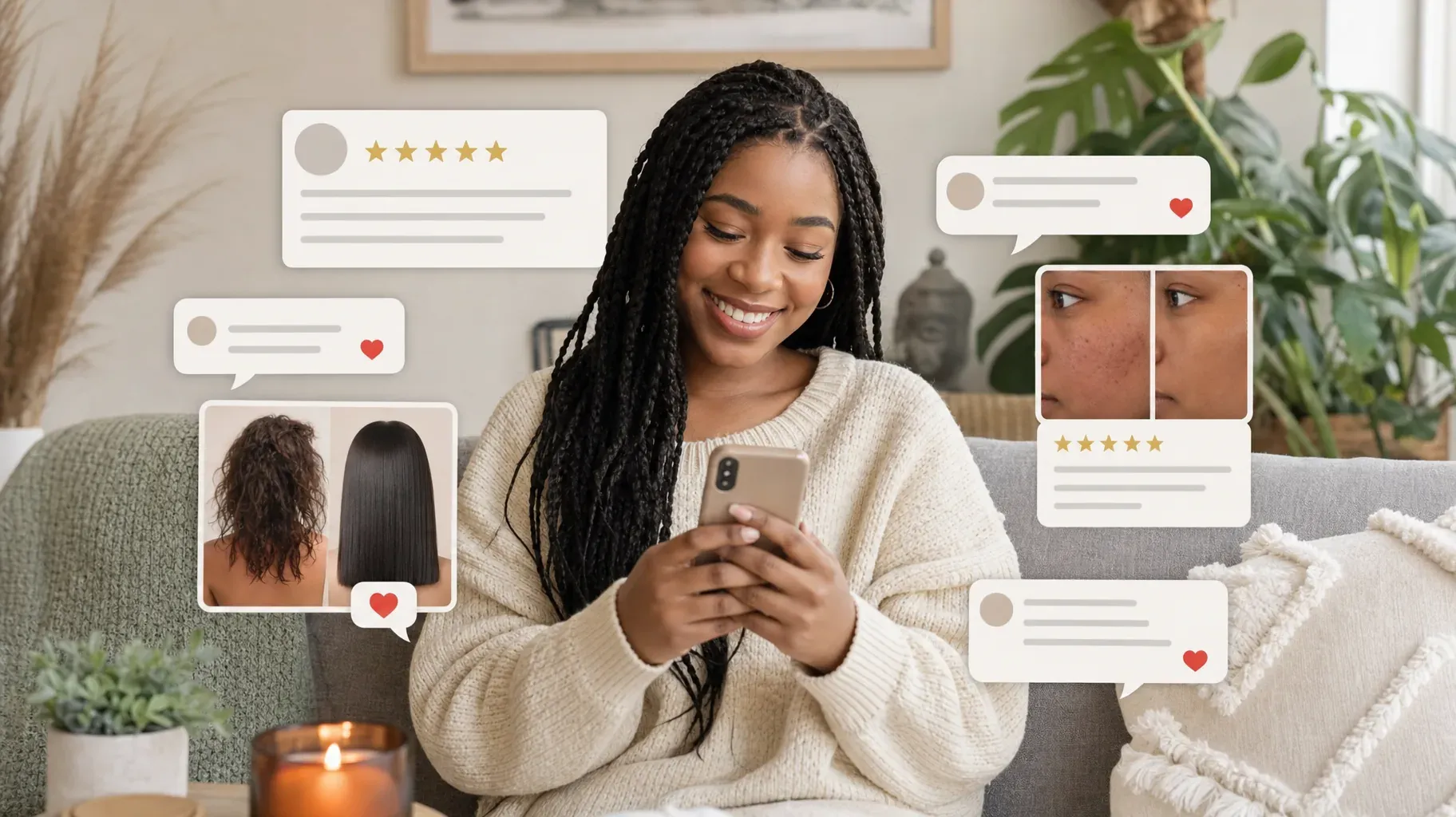
People trust other customers more than they trust you. Showing real results from real people is one of the most powerful ways to sell.
- Screenshot kind messages and reviews, with permission, and share them in Stories and posts.
- Share before-and-afters that show the transformation your offer provides.
- Tell customer stories in short videos or carousels: where they started, what they did, and what changed.
- Add testimonials to your sales page right next to the buy button.
- Save proof in a Story Highlight, such as "Reviews" or "Results," so new visitors can find it anytime.
If you are just starting and have no customers yet, offer your product to a few people for free or at a discount in exchange for honest feedback. Their results become your first social proof.
7. Create a free resource that leads to a paid offer
A free resource, sometimes called a lead magnet, lets people experience your value before they spend money. Done well, it builds trust and naturally leads to a paid offer.
What makes a good free resource:
- It solves one small, specific problem quickly.
- It is related to your paid offer, so people who enjoy it want more.
- It delivers a quick win, such as a checklist, a template, a mini-guide, or a short video lesson.
How to use it:
- Promote the freebie in your content and link it in your bio.
- Ask for an email address in exchange.
- Deliver it instantly, then follow up with a short email sequence that shares more value and introduces your paid offer.
This turns casual followers into subscribers you can reach directly, even when the algorithm does not show them your posts.
8. Offer a small first purchase
The biggest step in any customer relationship is the first purchase. Once someone has bought from you and had a good experience, buying again is much easier.
That is why many successful creators offer a low-priced product as an entry point:
- A mini-guide, a template, or a preset pack at a small price.
- A short workshop recording.
- A starter kit or sample of a physical product.
You can offer it right after someone downloads your free resource, or as an add-on at checkout. Customers who start with a small purchase often come back for your bigger offers later.
9. Use Stories to sell every day
Stories are one of the best places to sell on social media. They feel personal, disappear after 24 hours, and let people take action in a tap.
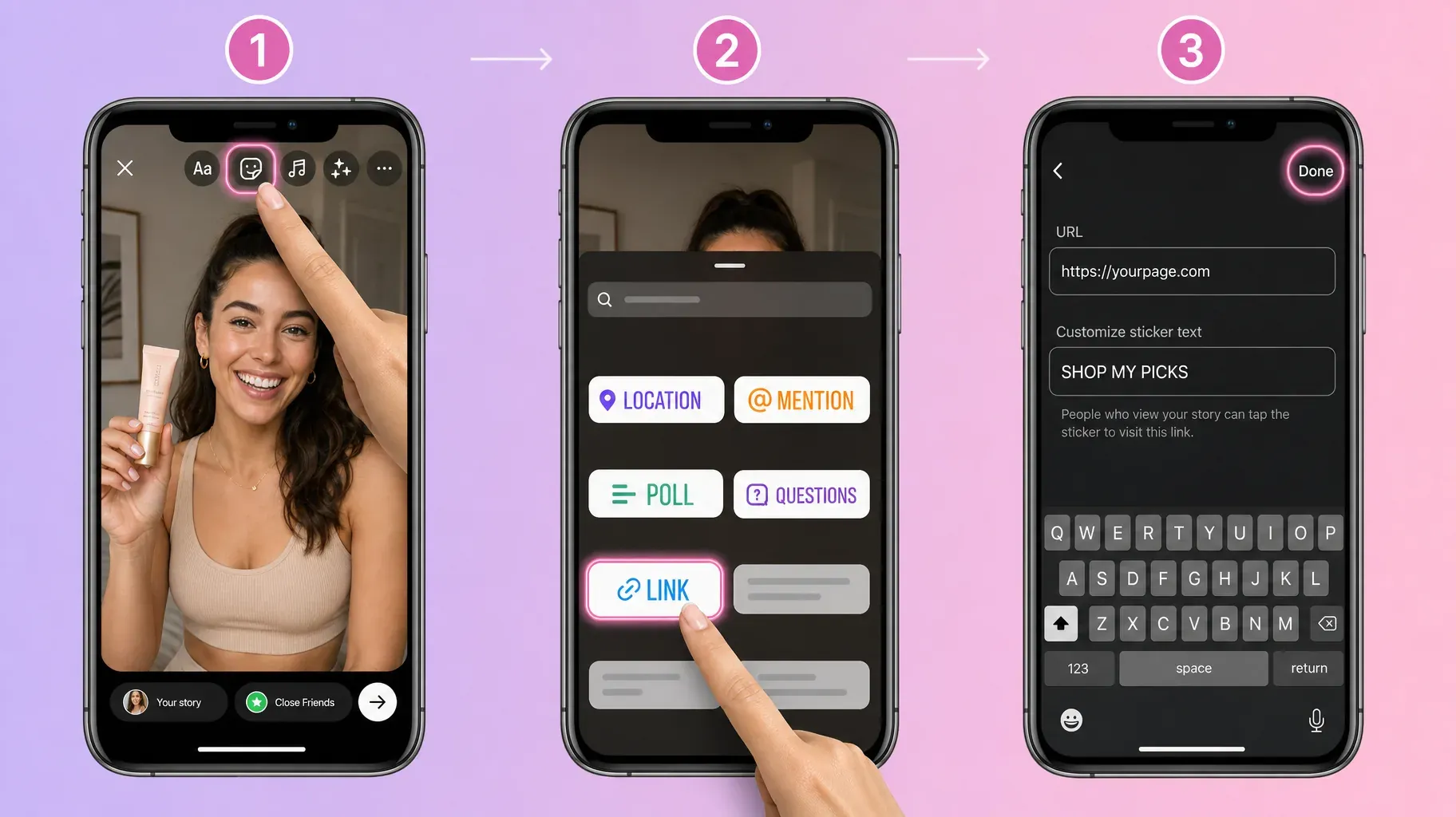
- Add a link sticker to Stories that mention your offer, so viewers can buy without leaving the Story.
- Use polls and question stickers to start conversations and learn what your audience needs.
- Show behind the scenes: how you create your product, how you pack orders, how customers use it.
- Run countdowns for launches and limited offers.
- Reply to questions in Stories, and turn common questions into short answers that lead to your offer.
A simple daily Story rhythm, a bit of value, a bit of personal life, and one mention of your offer, keeps you visible without feeling repetitive.

10. Sell live
Live video creates urgency and connection that recorded content cannot match. Viewers can ask questions, see products in real time, and buy while they are excited.
- Announce your live in advance so people show up.
- Demonstrate your product or teach something related to your offer.
- Answer questions live, especially about price, delivery, and results.
- Offer a live-only bonus or limited-time discount.
- Pin your link in the comments or chat, and remind people of it several times.
- Save the replay and share clips afterward.
Even small lives with a few dozen viewers can lead to strong sales, because the people who show up are often your most engaged followers.
11. Post consistently and build trust over time
Consistency does two things: it keeps you visible, and it proves you are reliable. Followers who see you show up week after week trust you more when it is time to buy.
- Choose a realistic rhythm, such as three to five posts per week and Stories most days.
- Mix content types: educational posts, entertaining Reels, personal moments, customer stories, and offer-focused content.
- Batch your content so busy weeks do not break your rhythm.
- Reply to comments and messages, since conversations often lead to sales.
It is better to post three times a week for a year than every day for a month and then disappear.

12. Track what sells and double down
You cannot improve what you do not measure. A few simple numbers show which content actually brings sales.
- Link clicks: which posts and Stories send people to your offer.
- Page visits and conversion rate: how many visitors buy.
- Sales by source: Instagram, TikTok, YouTube, email, or elsewhere.
- Revenue per offer: which products perform best.
Each week, look at your best-selling content and ask why it worked. Was it the hook, the format, the proof, or the timing? Make more of what works and stop what does not.
Write hooks and captions that sell
The first second of a Reel and the first line of a caption decide whether anyone sees your offer at all.
Hooks that stop the scroll:
- Name the problem: "If your photos never look like your favorite creators', this is why."
- Promise a result: "How I booked 10 clients in one month without ads."
- Challenge a belief: "You do not need more followers to sell more."
- Show the outcome first: open with the finished result, then show how you got there.
Captions that convert:
- Open with a line that speaks directly to your ideal customer.
- Share one useful insight or a short story.
- Connect it to your offer in one or two sentences.
- End with a single, clear action: "Comment GUIDE and I will send it to you," "Tap the link in my bio," or "Save this for later."
Use keyword comments. Asking people to comment a word, then replying with the link in a direct message, boosts engagement and starts private conversations that often lead to sales.
Examples of creators selling well
A skincare creator films a weekly "what I use and why" Reel, links her favorite products in her bio, and saves customer before-and-afters in a Highlight. Her Stories feature one product a day with a link sticker.
A fitness coach offers a free 5-day challenge in exchange for an email, then presents her 8-week program on day five. Each challenge brings a new wave of clients.
A digital illustrator sells phone wallpapers for a few dollars as a first purchase, then promotes her custom portrait commissions to buyers who loved the wallpapers.
A small jewelry brand hosts a monthly live drop, shows each piece on camera, and offers a live-only bonus. Most of the collection sells during the stream.
A productivity creator answers one follower question per day in Stories, and ends each answer with a pointer to his planner template.
In every case, the content is useful on its own, and the offer is always one tap away.
Choose the right format for each goal
- Reels and short videos reach new people. Use them to show results, share quick tips, and point to your free resource.
- Carousels teach and persuade. Use them for step-by-step guides, before-and-afters, and "who this is for" posts.
- Stories convert people who already follow you. Use them for daily reminders, link stickers, and behind the scenes.
- Lives create urgency and trust. Use them for launches, demos, and Q&A sessions.
Selling without feeling pushy
Many creators hold back because selling feels uncomfortable. It helps to reframe it.
Selling is helping. If your offer genuinely solves a problem, telling people about it is a service. Not mentioning it means people who need it will not find it.
Lead with value. When most of your content educates, entertains, or inspires, occasional offers feel natural.
Be honest. Explain who your offer is for and who it is not for. People trust creators who are transparent.
Celebrate customer wins. Sharing results focuses the conversation on the people you helped, not on you.
A simple weekly selling routine
- Monday: share a helpful post related to your offer's topic.
- Tuesday: post a customer story or result.
- Wednesday: go live or post a Reel answering a common question, ending with your offer.
- Thursday: share behind-the-scenes content about your product or process.
- Friday: post a clear offer-focused piece with a direct call to action.
- Every day: use Stories with a link sticker, a poll, and a personal moment.
- Weekend: review your numbers and plan next week's content.
Mistakes to avoid
Hiding your offer. If people do not know what you sell, they cannot buy it.
Sending followers to a confusing page. Make sure your link leads to a fast, clear page where buying is easy.
Only posting sales content. Too many pitches without value will push followers away.
Being vague. Generic offers attract nobody in particular. Be specific about audience and results.
Ignoring messages. Direct messages are often where sales happen. Reply quickly and helpfully.
Giving up too soon. Selling on social media builds momentum over time. Most successful creators refined their approach for months before sales became consistent.
Frequently asked questions
How do I start selling on social media?
Choose one offer that solves a specific problem for your audience, create a simple page where people can buy it, add the link to your bio, and talk about it regularly in your content and Stories.
How often should I promote my products?
Several times a week, with different angles each time, and daily in Stories during launches. Most followers miss most of your posts, so repetition is necessary.
What sells best on social media?
Products and services that solve a clear problem or deliver a desirable result, such as templates, courses, coaching, presets, digital guides, and physical products shown in use.
Do I need a lot of followers to sell?
No. A small, engaged audience that trusts you can generate meaningful sales. Specific offers and strong social proof matter more than follower count.
How can I sell without being pushy?
Lead with value, share customer results, be honest about who your offer is for, and treat selling as helping people solve a problem.
Which platform is best for selling?
The one where your audience already spends time. Instagram, TikTok, YouTube, and Pinterest can all drive sales. Focus on one or two platforms and do them well.
How long does it take to see sales from social media?
It varies, but most creators see their first consistent sales after a few months of regular posting, clear offers, and repeated calls to action. A launch with a waitlist or a live event can speed things up.
Should I use discounts to sell more?
Occasionally, for launches or special events, discounts create urgency. Used too often, they train followers to wait for the next sale. Bonuses, such as an extra template or a live Q&A, often work better than price cuts.
Is email still important if I sell on social media?
Yes. Email lets you reach your audience directly, regardless of algorithm changes. Many creators make a large share of their sales from email, especially during launches.
Turn your audience into customers
Selling more on social media comes down to a few habits: make buying easy, make your offer specific and transformation-focused, show proof, repeat your message, and track what works. None of it requires a huge audience, only consistency and a clear path from post to purchase.
Give your followers a place where buying takes seconds. A Roctify page lets you sell products, digital downloads, bookings, and memberships from your link in bio, collect emails with free resources, and track what sells, with 0% transaction fees on every plan. Create your Roctify page and start selling more today.