Brands need more videos than ever. Every TikTok ad, Instagram Reel, product page and email campaign needs fresh content that looks like it came from a real customer rather than a studio. That demand has created a new kind of creative job, the UGC creator, someone who gets paid to film short, natural videos about products without needing a big following.
This guide explains what a UGC creator does, how the job differs from being an influencer, which videos brands actually buy and how to get started step by step. You will also find how to structure a video that converts, how to build a portfolio, typical rates, how usage rights work, where to find clients, how to pitch brands and how to turn one-off gigs into a stable creator business.
What is a UGC creator
A UGC creator is a content creator who makes photos and videos for brands in the style of user-generated content, meaning content that looks like it was made by a real customer. The brand pays for the content itself and then uses it on its own channels, in ads, on product pages, in emails or on its social accounts.
The key difference with traditional influencer marketing is where the content lives. A UGC creator usually does not post the video on their own profile. They deliver files to the brand, and the brand decides where to publish them. That's why follower count matters much less. Brands hire UGC creators for their ability to make content that feels authentic and persuades, whatever their audience size.
A typical UGC job looks like this. A skincare brand sends you a serum and a short brief. You film a 30-second video showing your routine, your first impression and the result after a few days. You edit it, add captions, deliver two or three variations with different hooks, and the brand runs the best one as a TikTok and Instagram ad.
UGC creator vs influencer
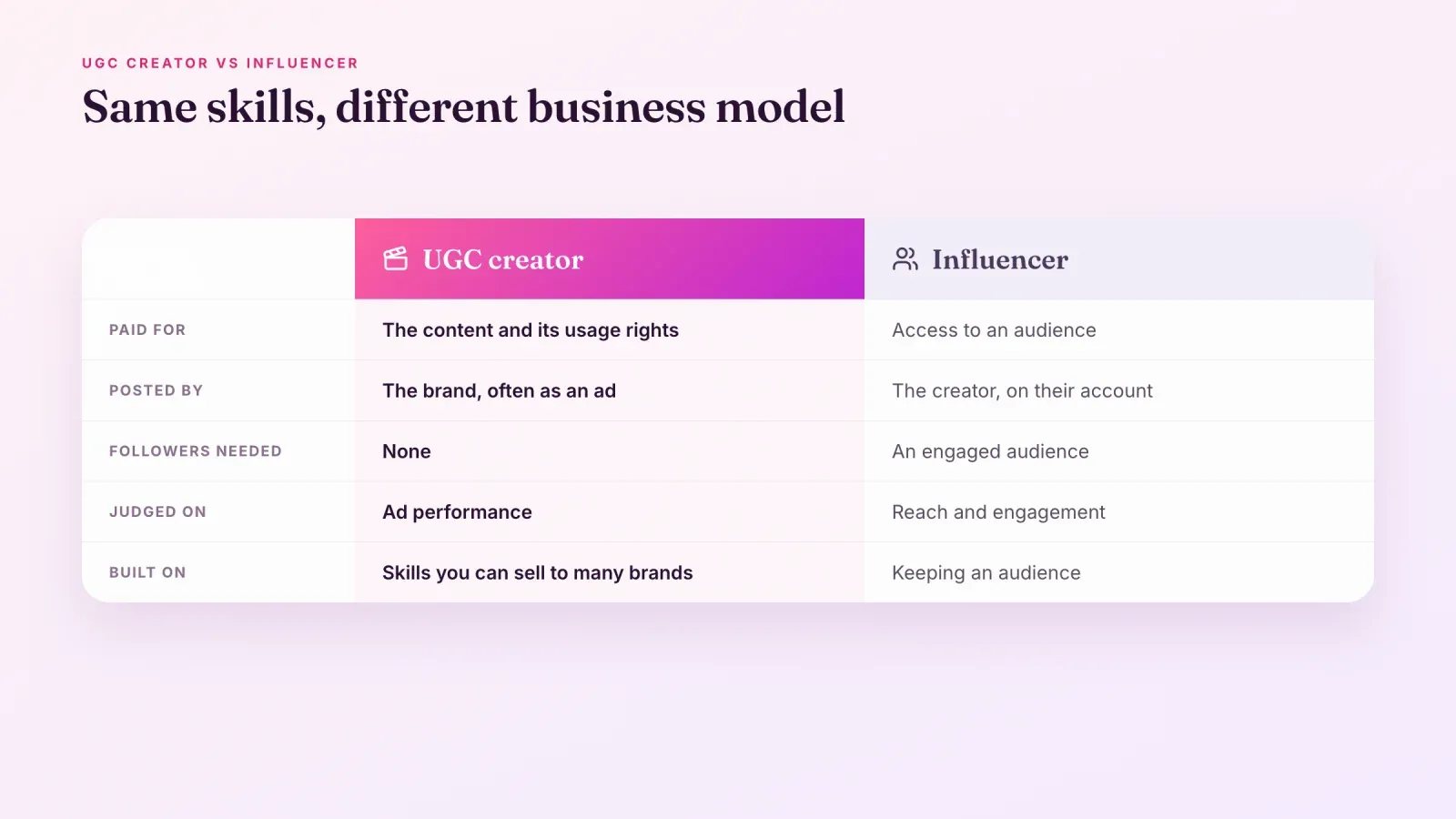
Both jobs involve making content for brands, but the business model is different.
- What the brand pays for. An influencer is paid for access to their audience. A UGC creator is paid for the content and the right to use it.
- Where the content appears. Influencer content is posted on the creator's account. UGC is posted by the brand, often as an ad.
- Followers needed. Influencers need an engaged audience. UGC creators can start with zero followers.
- Who owns the content. The influencer keeps the post on their page. With UGC, the brand gets usage rights for a period or forever, depending on the contract.
- How success is measured. Influencer deals are judged on reach and engagement. UGC is judged on ad performance, such as click-through rate, cost per purchase and watch time.
- Career longevity. An influencer depends on keeping an audience. A UGC creator depends on skills, which can be improved and sold to many brands at once.
Many creators do both. They start with UGC to earn money while their own audience grows, or they add UGC packages to their influencer offers.
Why brands pay for UGC
UGC has grown fast for a few simple reasons.
People trust people more than ads. Shoppers are used to polished brand ads and scroll past them. A video of a real person talking about a product feels like a recommendation from a friend, which is far more convincing.
Short video platforms reward native content. On TikTok, Reels and Shorts, ads that look like normal posts blend into the feed and often perform better than studio content.
Ads need constant refreshing. An ad loses its effect after people have seen it too many times. Brands need a steady flow of new creatives, and UGC creators can produce many variations quickly and at a fraction of the cost of a traditional shoot.
It works across the funnel. The same video can be used as an ad, on a product page, in an abandoned cart email or as a testimonial on a landing page.
What brands look for in UGC
When brands choose a UGC creator, they look for a few specific qualities.
Authenticity. The video should feel like a real person sharing a real experience. Natural lighting, a normal home setting and an honest tone beat a perfect studio look.
A strong hook. The first two seconds decide whether people keep watching. Brands love creators who know how to open with a question, a bold statement or a surprising visual. Our guide to the best ad hooks has dozens of examples.
Clear communication. You need to explain the benefit of the product simply, in your own words, and follow the brief without sounding scripted.
Platform awareness. Knowing current trends, formats and sounds helps your content feel native on TikTok, Instagram and YouTube Shorts.
Reliability. Meeting deadlines, answering messages and delivering exactly what was promised are what turn a first job into a long-term client.
Types of UGC videos brands buy
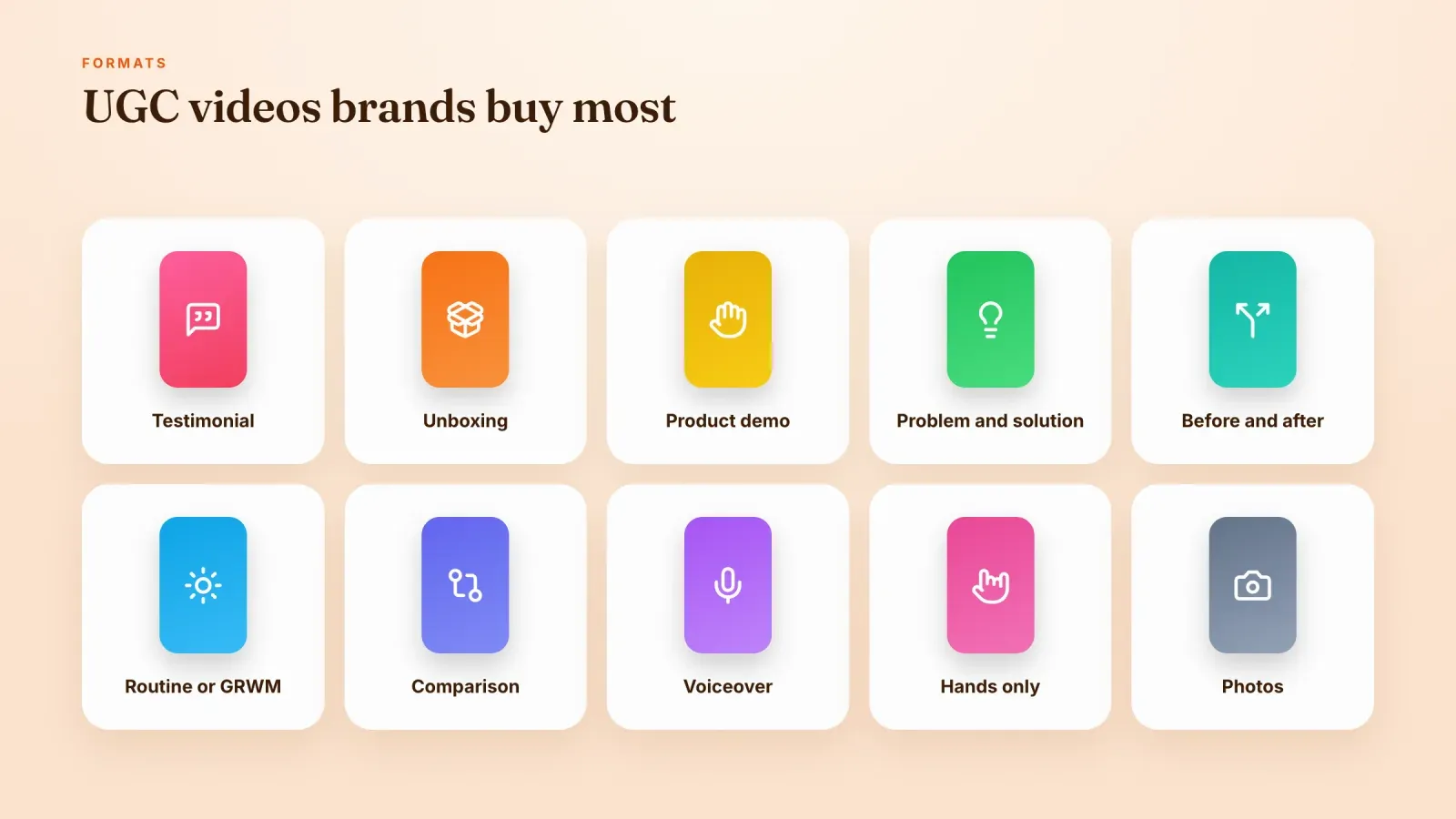
Most UGC jobs fall into a few formats. Being good at several of them makes you more useful to brands.
- Testimonial. You talk to the camera about your experience with the product and why you recommend it.
- Unboxing. You open the package and react to the product, the packaging and the first impression.
- Product demo. You show how the product works, step by step, ideally solving a real problem.
- Problem and solution. You start with a frustration your audience knows, then show how the product fixes it.
- Before and after. You show a visible change, such as skin, a clean room or an organized desk. Make sure results are honest and allowed by the brand's rules.
- Get ready with me or routine. You use the product naturally as part of your day.
- Comparison. You compare the product with an alternative, often the "old way" of doing things.
- Voiceover. You narrate over product shots or b-roll without appearing on camera.
- Hands-only or faceless. Close-ups of your hands using the product, ideal if you prefer not to show your face.
- Photos. Lifestyle and flat-lay photos for product pages and social posts.
How to become a UGC creator step by step
You don't need a big audience, expensive gear or a marketing degree. You need a clear process.
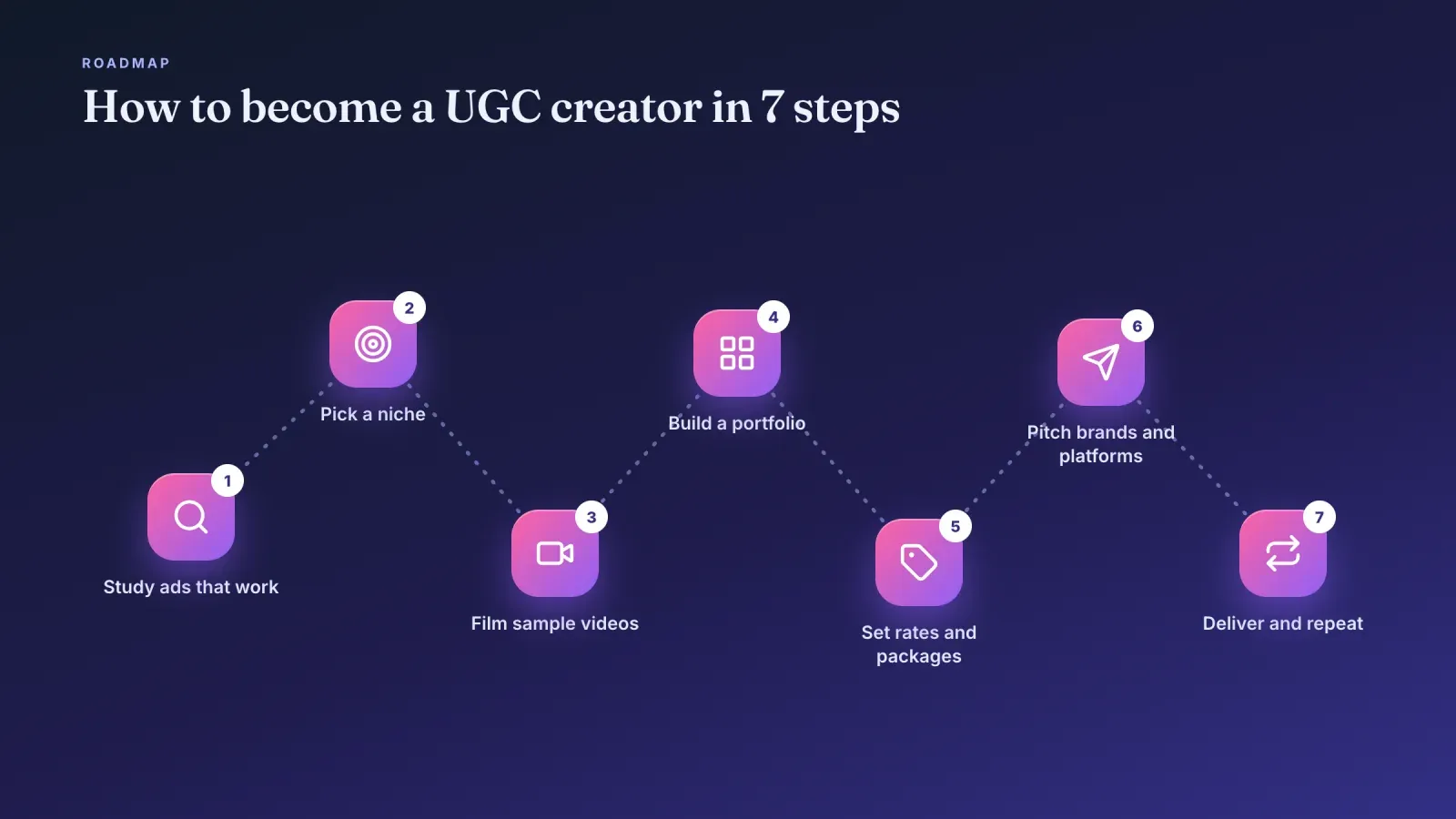
Step 1. Study what works
Before filming, watch a lot of UGC ads. The Facebook Ads Library and the TikTok Creative Center let you browse ads brands are running right now. Notice how the best ones open, how long they last, how they show the product and how they end. Save the ones you like in a swipe file, a simple folder of examples you can learn from.
Step 2. Pick a niche you understand
Brands prefer creators who know their category. Choose one to three niches linked to your life, such as skincare, fitness, food, tech, pets, parenting, home or fashion. If you are a parent, baby products are a natural fit. If you work out every day, fitness supplements and gear make sense.
Step 3. Make sample videos with products you own
You don't need a client to start. Film three to five spec videos using products you already have at home. Use different formats, such as a testimonial, an unboxing and a demo. These samples show brands what you can do.
Step 4. Build a simple portfolio
Put your best videos on one page with a short bio, the niches you cover, the formats you offer and a contact or booking link. More details below.
Step 5. Set your rates and packages
Decide what you charge for one video, a bundle of three and extras like raw footage, extra hooks and usage rights. Write it down so you can answer quickly when a brand asks.
Step 6. Pitch brands and join platforms
Start reaching out to brands directly and sign up on UGC marketplaces. Consistency matters more than perfection. Sending a few personalized pitches every day adds up fast.
Step 7. Deliver, collect feedback and repeat
Deliver on time, ask for feedback and, when possible, ask how your video performed. Every job improves your portfolio, your skills and your chances of being hired again.
How to make a UGC video that converts
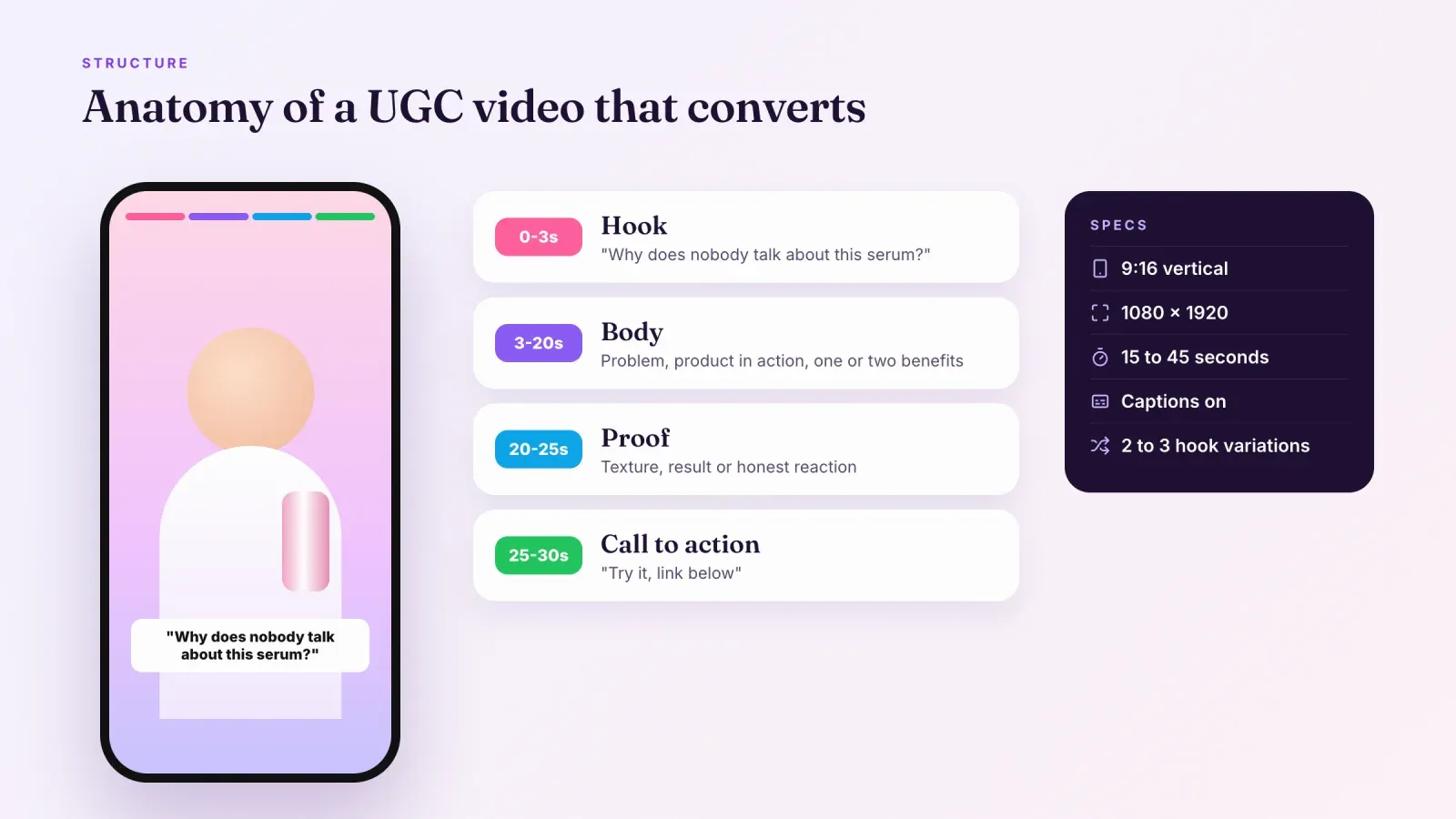
Most performing UGC videos follow a simple structure.
1. Hook, 0 to 3 seconds. Grab attention with a question ("Why does nobody talk about this?"), a bold statement, a relatable problem or a surprising visual. Show the product or the problem immediately.
2. Body, 3 to 20 seconds. Explain the problem, show the product in action and highlight one or two key benefits. Talk the way you would to a friend.
3. Proof, a few seconds. Show a result, a texture, a detail or your honest reaction. This is the moment that makes viewers believe you.
4. Call to action, last seconds. Tell people what to do next, like "try it, link below" or "this is your sign to grab one."
Technical tips help too. Film vertically in 9:16 at 1080 by 1920 pixels, use natural light facing a window, record clean audio with a small clip-on microphone, keep most ads between 15 and 45 seconds, add captions since many people watch without sound, and keep text away from the edges where platform buttons appear. Deliver a few variations with different hooks, since brands often test them against each other.
Building a UGC portfolio
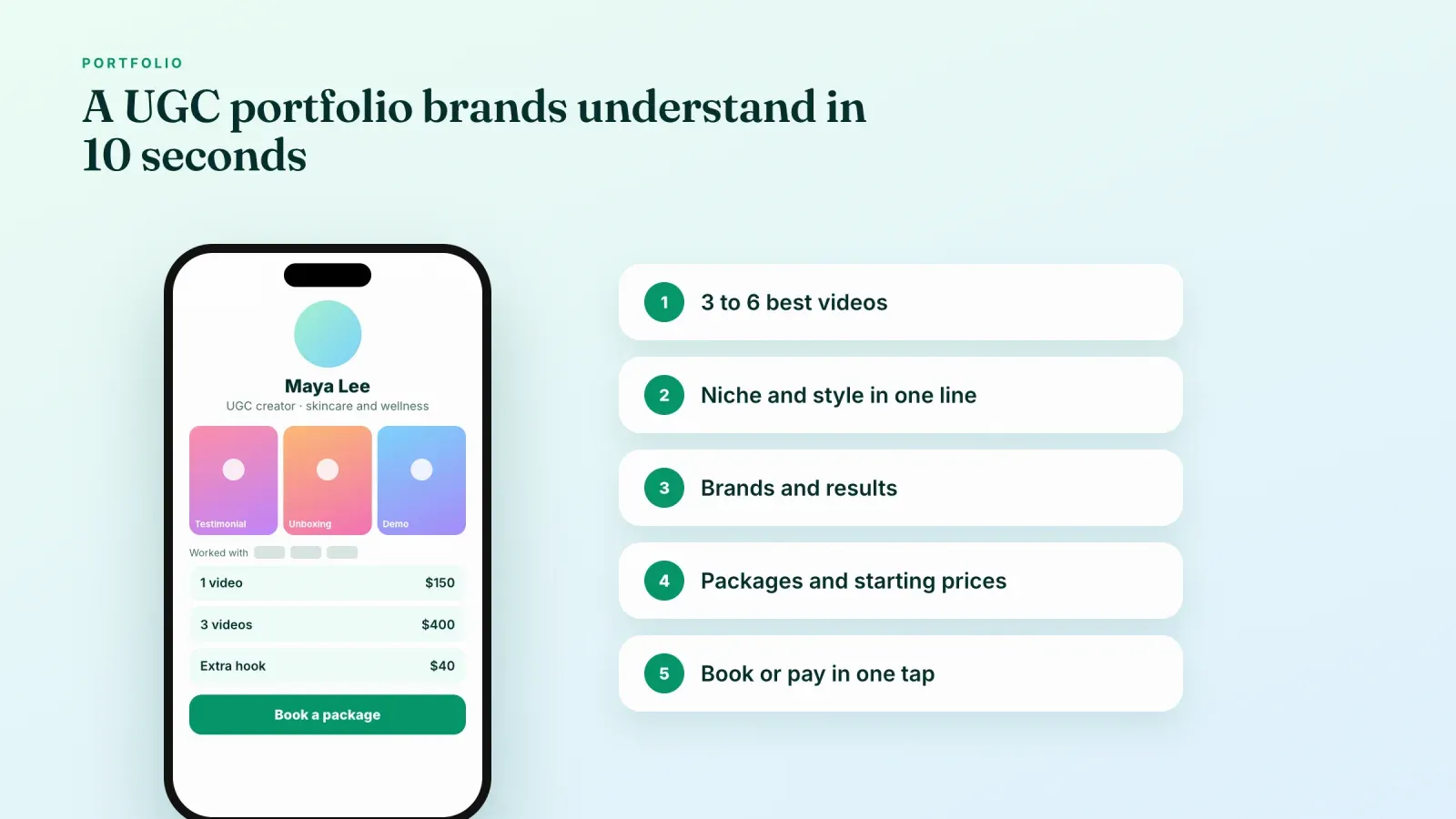
Your portfolio is your shop window. Brands should understand what you do in less than ten seconds.
- Three to six of your best videos, ideally in different formats and niches.
- A short bio with your niches, your style and the type of brands you work with.
- Brands you've worked with, even small ones, and any results you can share, such as a high click-through rate or a strong return on ad spend.
- Your services and starting prices, or a clear "packages from" line.
- Testimonials from brands.
- A contact, booking or payment link so a brand can hire you right away.
You can build it on a simple website, a shared drive folder or a link in bio page. The best option is a page where brands can watch your videos, see your packages and book or pay in one place. Update it every time you deliver a video you're proud of.
How much UGC creators charge
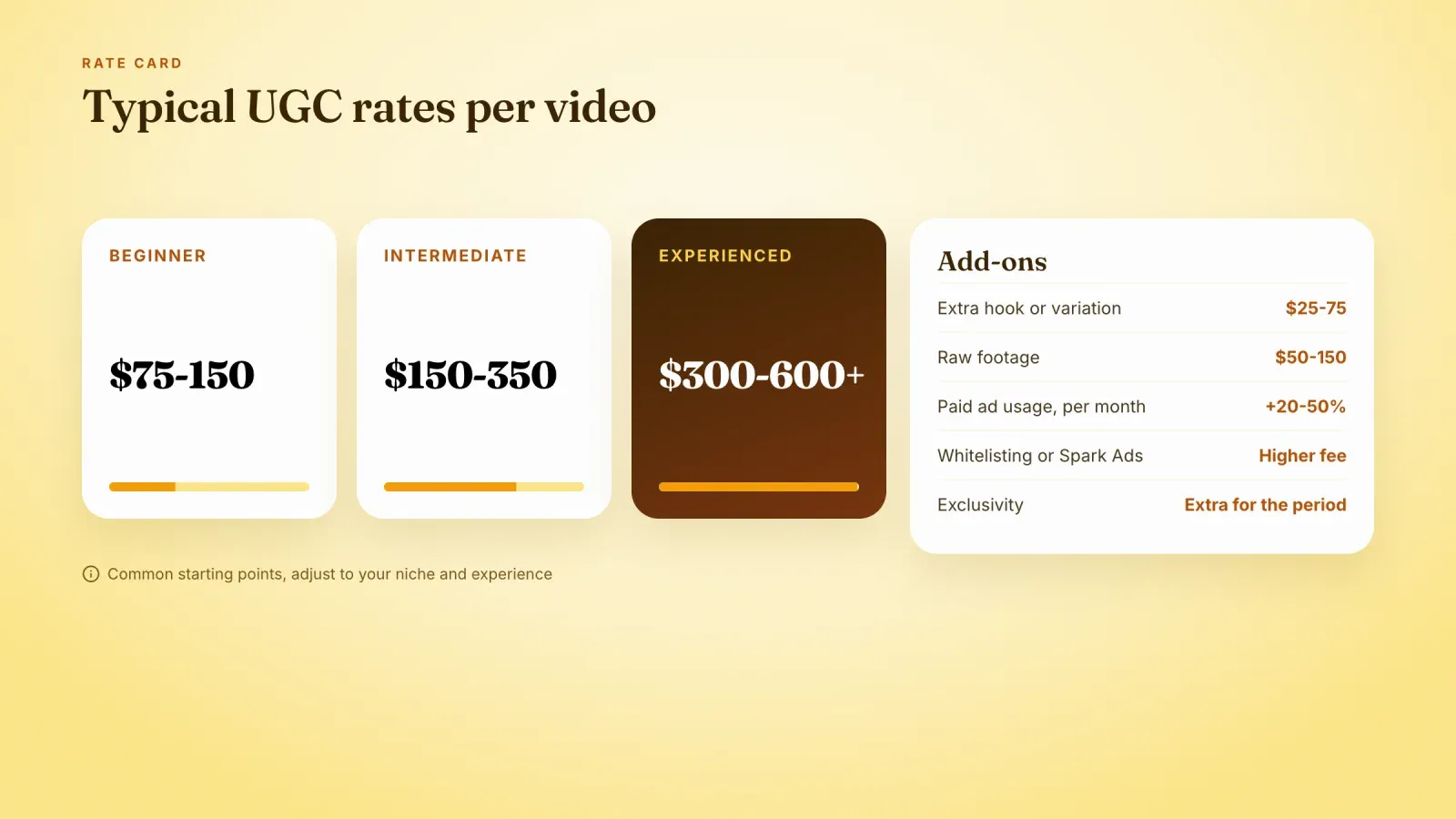
Rates depend on your experience, the niche, the number of videos, the editing required and above all the usage rights. These ranges are common starting points in the US market, and many creators adjust them over time.
- Beginner, one video of 15 to 30 seconds. Around $75 to $150.
- Intermediate, one video. Around $150 to $350.
- Experienced, one video. Around $300 to $600 or more.
- Bundle of three videos. Often priced at a small discount compared with three single videos.
- Extra hooks or variations. Usually $25 to $75 each.
- Raw footage. Often an extra $50 to $150.
- Paid ad usage rights. Commonly an extra 20% to 50% per month of usage, or a higher flat fee for long or unlimited usage.
- Exclusivity. If a brand asks you not to work with competitors, charge extra for the period of exclusivity.
Part-time UGC creators often earn a few hundred to a couple of thousand dollars a month, and full-time creators with regular clients can earn much more. The fastest way to raise your income is to move from one-off videos to monthly retainers.
Usage rights, whitelisting and contracts
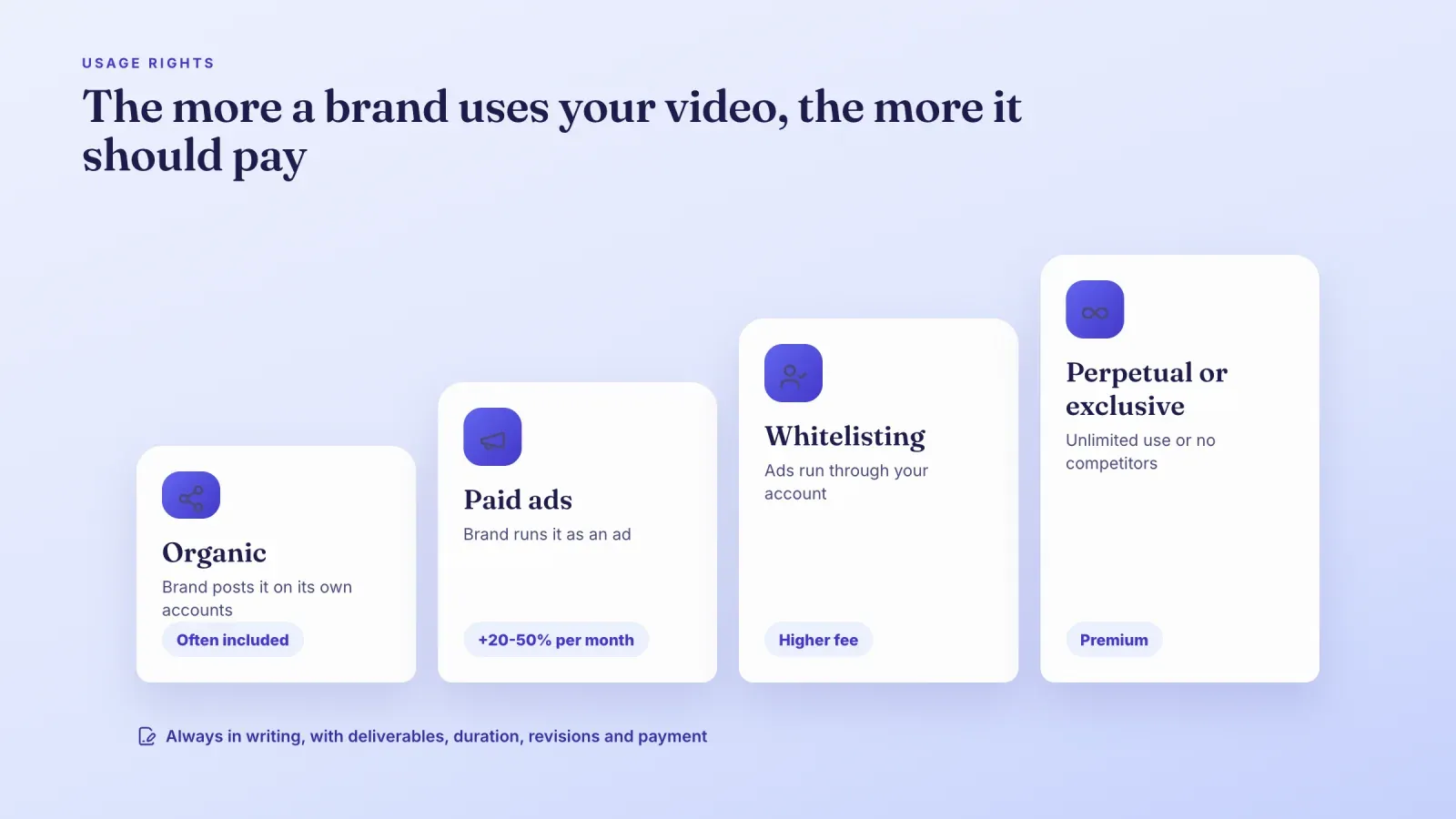
Usage rights define how and how long a brand can use your content. They are one of the most important parts of any UGC deal.
- Organic usage. The brand posts your video on its own social accounts. This is often included in the base price.
- Paid usage. The brand runs your video as an ad. This is worth more, because ads can reach millions of people.
- Whitelisting or Spark Ads. The brand runs ads through your own account or in your name. This involves your identity and your profile, so it should be priced higher.
- Duration. Usage is usually sold for 30, 60 or 90 days, 6 months or a year. Perpetual usage costs the most.
- Exclusivity. You agree not to work with competing brands for a set period.
Always put the terms in writing, even for small jobs. A simple agreement should cover the deliverables, deadlines, number of revisions, usage rights and duration, exclusivity, price, payment terms and what happens if the project is canceled. Ask for a deposit from new clients, often 50% upfront.
If your video is posted on your own account or run in your name, advertising rules apply. Sponsored content must be clearly disclosed, for example with the platform's paid partnership label.
Where to find UGC jobs
There are four main ways to find clients.
UGC marketplaces. Platforms such as Billo, Collabstr, Insense, JoinBrands and Trend list campaigns from brands looking for creators. They make it easy to get your first jobs, though rates are often lower and competition is high.
Freelance platforms. Upwork and Fiverr have many UGC requests, especially from small ecommerce brands.
Agencies. Creative and performance marketing agencies hire UGC creators for their clients. Building relationships with a few agencies can bring steady work.
Direct outreach. Contacting brands yourself is often the most profitable channel. Look for small and mid-sized brands that already run ads, because they understand the value of fresh creatives.
How to pitch brands
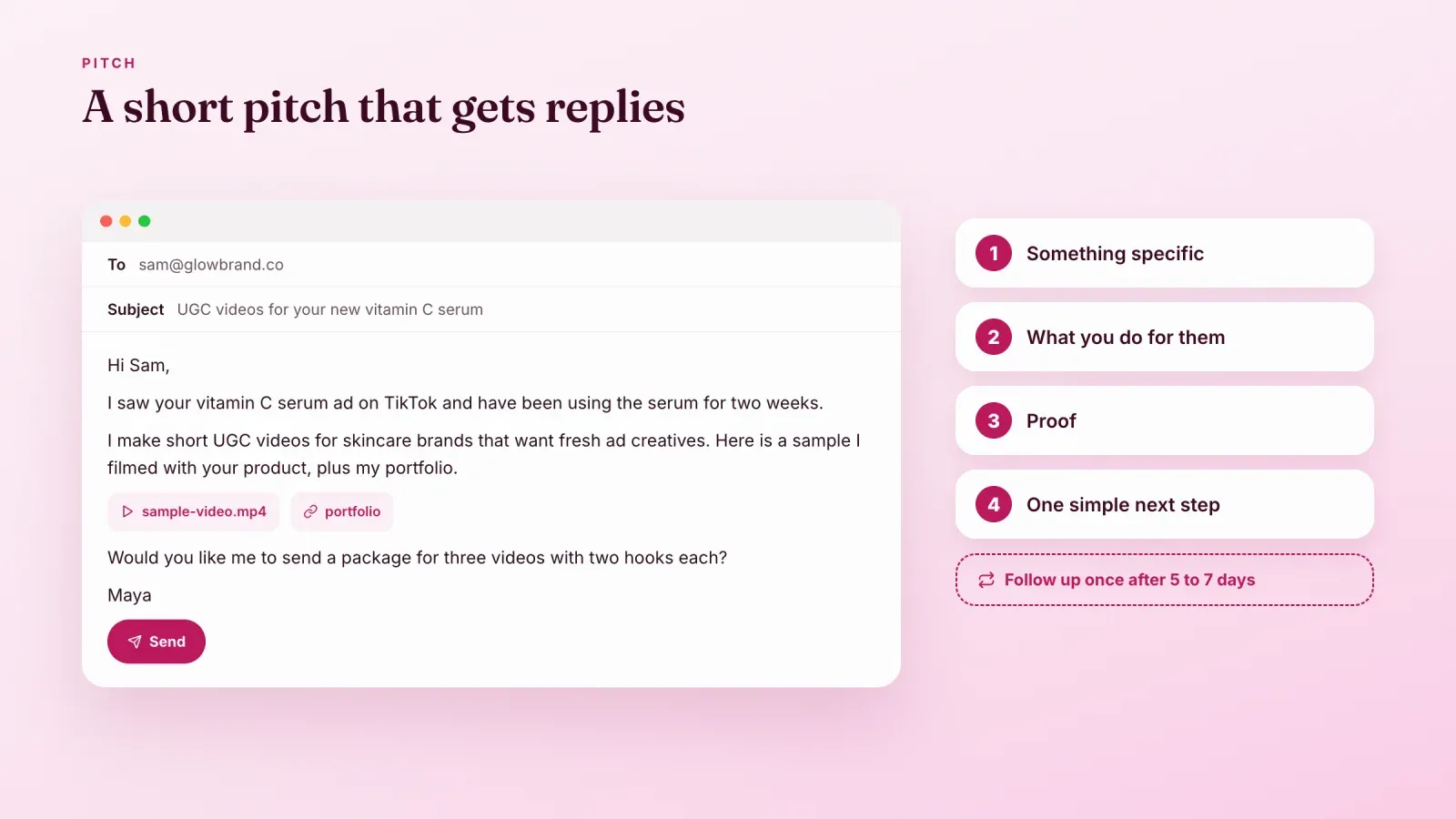
A short, personal pitch works better than a long generic message.
- Find the right person, such as the marketing manager, social media manager or founder of a small brand.
- Open with something specific, like an ad they're running or a product you genuinely use.
- Explain what you can do for them in one or two sentences, such as "I make short UGC videos for skincare brands that want fresh ad creatives."
- Show proof with a link to your portfolio and, ideally, a sample video featuring their product.
- End with a simple next step, like "Would you like me to send a package for three videos?"
Follow up once after five to seven days if you don't hear back. Many deals happen on the second message.
Equipment and tools
You can start with what you already have.
- Phone. Any recent smartphone films in good enough quality.
- Light. Natural window light is free and flattering. A ring light or small LED panel helps in the evening.
- Sound. A clip-on wireless microphone makes your voice clear and professional.
- Tripod. A small tripod with a phone holder keeps your shots stable.
- Editing apps. CapCut, InShot, VN or Descript for cuts, captions and voiceovers.
- Organization. A shared drive for deliveries, a simple spreadsheet to track pitches and clients, and an invoicing tool.
Taxes and admin
UGC creators are usually independent contractors. In the United States, that often means reporting income as self-employment and setting aside money for taxes. In many countries you need a business registration to invoice clients. Keep every invoice and receipt, track your expenses, such as equipment and software, and talk to an accountant once your income becomes regular.
Common mistakes UGC creators make
Over-editing. Heavy effects and perfect lighting can make UGC look like a regular ad. Keep it natural.
Weak hooks. If the first seconds are slow, the rest of the video won't be seen.
Undercharging and skipping contracts. Very low prices and verbal agreements lead to endless revisions and unpaid usage.
Forgetting the viewer. Talk about what the product does for the viewer, rather than listing features.
Delivering only one version. Brands test variations. Offering two or three hooks makes you more valuable.
Pitching too little. Landing the first clients is a numbers game. A few pitches a week is rarely enough.
Scaling beyond one-off gigs
Once you have a few clients, you can build a more stable business.
- Monthly retainers. Offer a set number of videos per month at a fixed price. Brands get a steady flow of creatives, and you get predictable income.
- More services. Add scripting, editing, ad strategy or content for the brand's own social accounts.
- Your own audience. Posting your UGC process and tips on your own profile attracts brands and other aspiring creators.
- Your own products. Many experienced UGC creators sell templates, pitch scripts, rate card kits, courses or coaching to beginners. A digital product lets you earn from what you've learned without trading more time. Our list of digital products that sell can help you find ideas.
Frequently asked questions
What does a UGC creator do? A UGC creator makes photos and videos that look like authentic customer content for brands, which then use them in ads, on product pages and on social media.
Do I need followers to be a UGC creator? No. Brands pay for the content itself, so you can start with zero followers. A strong portfolio matters much more.
How much do UGC creators make? Beginners often charge around $75 to $150 per video, while experienced creators charge several hundred dollars per video, plus extra for usage rights and exclusivity.
How long does it take to land the first UGC job? It often takes a few weeks of consistent pitching. Having a strong portfolio and pitching every day speeds things up.
What equipment do I need? A smartphone, natural light, a small tripod and ideally a clip-on microphone are enough to start.
What are usage rights in UGC? Usage rights define where and for how long a brand can use your content, for example on its organic social accounts or in paid ads for 30 days.
Can I be a UGC creator without showing my face? Yes. Voiceovers, hands-only videos, unboxings and product demos are popular faceless formats.
Do I need a contract for every UGC job? Yes. Even a short written agreement protects you by defining deliverables, revisions, usage rights and payment.
Can I work with competing brands? Yes, unless you signed an exclusivity agreement. If a brand wants exclusivity, it should pay extra for it.
Turn your UGC work into a creator business
A UGC career starts with one good video and grows with a clear offer. Create your free Roctify page to show your portfolio, list your UGC packages, take bookings and payments, and sell your own templates or guides from one link, with 0% transaction fees on every plan. To understand the bigger picture, read our guide to the creator economy.