When people hear "personal brand," they often picture influencers with millions of followers, perfect photos, and sponsorship deals. So they decide it is not for them. They are not trying to become famous, they just want to do good work, grow their career, or run a small business.
But a personal brand is simply what people know you for, and the way you choose to share it. Every professional already has one, whether they shape it or not. Building it intentionally, by sharing what you know, what you make, and what you care about, can change your career in ways that have nothing to do with fame and often little to do with money at first.
This guide covers 10 unexpected benefits of building a personal brand, from meeting the right people and changing careers to gaining confidence and creating assets no employer can take away. You will also find a simple, low-pressure plan to start, even if you have never posted anything online.
What a personal brand really is
A personal brand is the reputation you build around your skills, ideas, and values, made visible through the things you share. It lives in your posts, your portfolio, your conversations, the problems you help solve, and the way people describe you when you are not in the room.
A few common misconceptions are worth clearing up:
- It is a real version of you. The strongest personal brands are simply amplified versions of who people already are.
- Follower count is secondary. A few hundred of the right people can matter more than a large, disengaged audience.
- It is for every profession. Designers, engineers, nurses, accountants, teachers, founders, and job seekers all benefit.
- It keeps evolving. It grows as you grow, and it changes as your work changes.
With that in mind, here are the benefits that surprise people most once they start.

1. You meet people you would never have met otherwise
When you share your work and ideas publicly, you become findable by people who care about the same things. Strangers reach out to say your post helped them. Peers in your field start conversations. Someone on the other side of the world becomes a friend, a collaborator, or a mentor.
This is one of the most underrated benefits of a personal brand. Instead of networking by chasing people at events, the right people start finding you, because your content already told them who you are and what you care about.
How to make the most of it:
- Reply thoughtfully to comments and messages.
- Engage with other people's content in your field, not just your own.
- Turn online conversations into short calls or coffee meetings when there is real common ground.
2. Opportunities start coming to you
A visible body of work acts like a portfolio that works while you sleep. People who have followed your posts for months already understand your skills and your style, so when they need someone, you are the first person they think of.
These opportunities can take many forms: freelance clients, job offers, speaking invitations, podcast interviews, collaborations, partnerships, and paid projects. Many of them are never advertised. They go to the people who are already visible.
How to make the most of it:
- Make it clear what you do and how people can work with you, in your bio and your link in bio.
- Share results and case studies, not only opinions.
- Keep a simple page with your services, portfolio, and contact options, so interest becomes action.

3. Changing careers becomes easier
Switching industries is hard when your résumé only shows your past. A personal brand lets you show your future before you get the job title.
If you want to move into marketing, you can document the campaigns you run for your own projects. If you want to become a designer, you can publish your design work and your process. If you want to move into tech, you can share what you learn and build as you go. Over time, your content becomes evidence that you can do the new job.
How to make the most of it:
- Share your learning journey openly, including projects and small wins.
- Connect with people already working in the field you want to join.
- Treat each piece of content as a portfolio sample for the role you want.
4. You become the go-to person in your field
When you consistently share useful knowledge about one topic, people start associating that topic with you. They tag you when a question comes up, recommend you to others, and come to you first when they need advice.
Being known as the person for a specific topic is powerful. It makes referrals easier, justifies higher prices, and opens doors to media and industry events.
How to make the most of it:
- Choose a clear focus, such as "email marketing for small shops" or "UX for healthcare apps."
- Answer the questions people in your field ask most often.
- Share your point of view, not just information everyone else already shares.

5. You get invited into rooms money cannot buy
Some of the most valuable spaces are invitation-only: private communities, founder dinners, expert panels, advisory roles, early access programs, and industry retreats. Access usually goes to people whose work is visible and respected.
A personal brand gives organizers and hosts a reason to invite you. They can see your thinking, your values, and the value you would add before they ever meet you.
How to make the most of it:
- Show up generously in the spaces you join, and share what you learn with your audience.
- Build relationships with community builders and event hosts in your field.
- Say yes to small invitations. They often lead to bigger ones.
6. You can connect with the people you admire
It is hard to get the attention of people you look up to by sending a cold message. It becomes much easier when they already know your work.
Sharing thoughtful commentary on their ideas, building on their frameworks, or creating something useful for their audience can put you on their radar in a natural way. Many creators and professionals have ended up collaborating with their heroes after months of consistent, genuine engagement.
How to make the most of it:
- Engage with their content thoughtfully and regularly, without asking for anything.
- Credit and share their work when it helps you.
- When you do reach out, be specific about why you admire their work and what you could offer.
7. You become a better communicator
Creating content regularly is one of the best communication trainings there is. You learn to explain complex ideas simply, tell stories that hold attention, and adapt your message to your audience.
These skills spill into everything else: presentations, job interviews, sales calls, team meetings, and even personal conversations. Many people say building a personal brand made them clearer thinkers, because writing and speaking publicly forces you to organize your ideas.
How to make the most of it:
- Practice one format consistently, such as short videos, written posts, or a newsletter.
- Study the hooks and structures of creators you admire.
- Ask for feedback and look at which posts people save and share.
8. You build assets that belong to you
Your job title, your employer's brand, and your company email disappear when you change jobs. Your personal brand stays with you.
Your audience, your content library, your email list, your portfolio, and your reputation are portable assets. They keep working for you whether you are employed, freelancing, between jobs, or launching a business. In an uncertain economy, that independence is a real form of security.
How to make the most of it:
- Build an email list so you can reach your audience without depending on one platform.
- Keep a personal website or link-in-bio page that you control.
- Save your best work in a portfolio that is always up to date.

9. You make a real difference for people
Sharing what you know helps people who are a few steps behind you. A post about how you handled a difficult situation, a tutorial, or a story about a failure can make someone feel less alone or give them the confidence to take their next step.
Many people who build a personal brand say this is the most meaningful benefit. Messages from strangers saying "this helped me" become a powerful reason to keep going.
How to make the most of it:
- Share honest lessons, including mistakes and doubts.
- Create resources that solve specific problems for your audience.
- Save kind messages in a folder you can revisit on hard days.
10. You believe in yourself more
Every post you publish, every conversation you start, and every opportunity you land proves that your ideas and skills have value. Over time, this builds a confidence that is hard to get any other way.
People often start their personal brand feeling like impostors. A year later, they have spoken on stages, worked with clients they admired, or changed careers, all things they did not think were possible when they began.
How to make the most of it:
- Keep a record of your wins, however small.
- Look back at your first posts every few months to see how far you have come.
- Celebrate milestones publicly and thank the people who supported you.
How to start building your personal brand
You do not need a strategy deck or a professional photoshoot to begin. Start small and stay consistent.
1. Define your focus. Write one sentence that describes who you help or what you share, such as "I share practical design tips for early-stage founders."
2. Choose one main platform. Pick where your audience already spends time: LinkedIn for many professionals, Instagram or TikTok for creators and consumer brands, YouTube for tutorials, or a newsletter for deep thinkers.
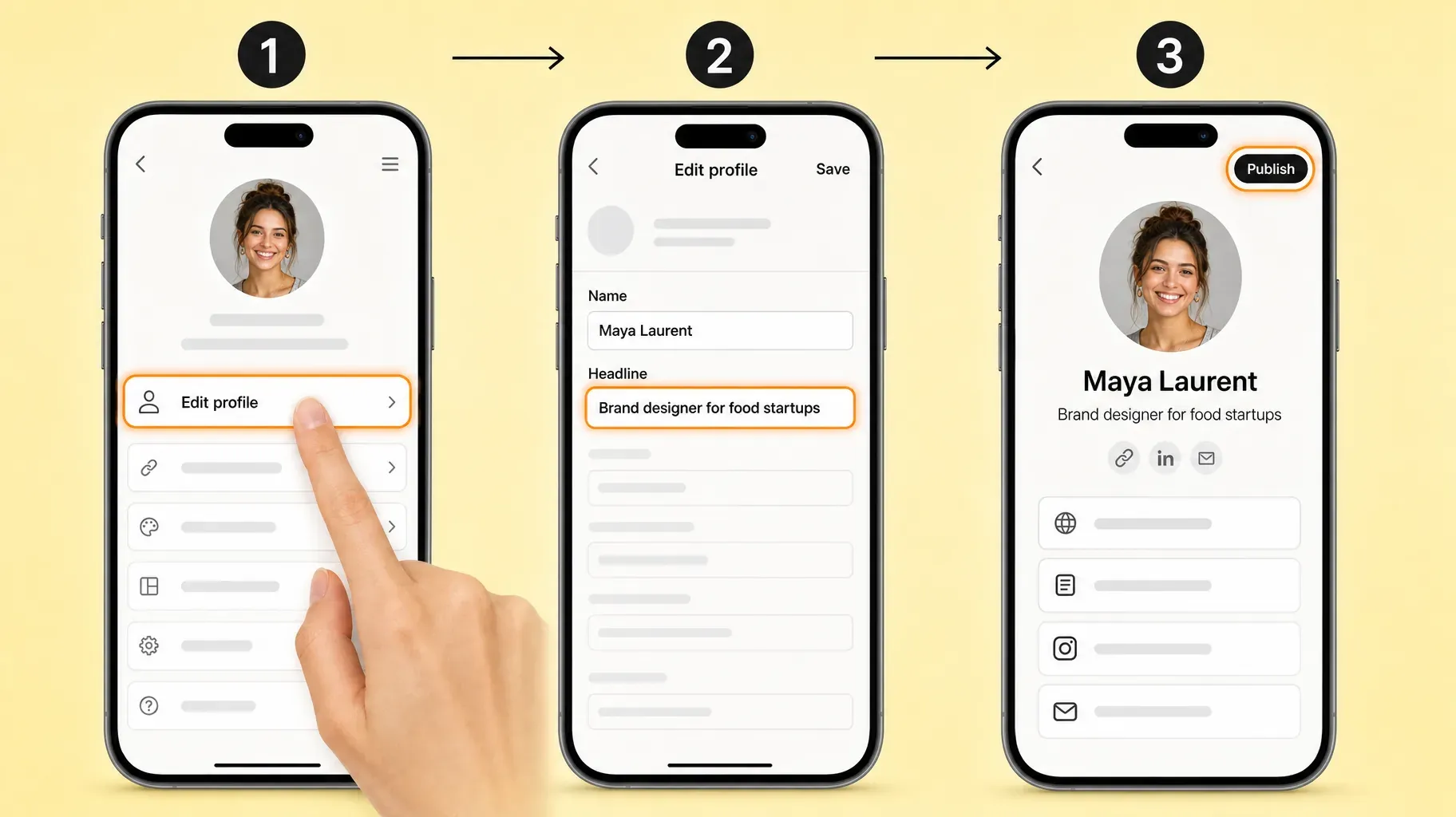
3. Set up a clear profile. Use a friendly photo, a headline that says what you do, and one link that leads to everything else.
4. Share consistently. Aim for two or three posts a week. Share lessons, projects, opinions, behind-the-scenes moments, and useful resources.
5. Engage every day. Spend 15 minutes commenting thoughtfully on other people's posts and replying to your own comments.
6. Create one home base. A personal page with your bio, portfolio, services, and contact options turns attention into opportunities.
7. Review and adjust. Every month, look at which posts resonated and which opportunities came in, and do more of what works.
A 30-day starter plan
Week 1: foundations. Write your focus sentence, update your profile photo and headline on your main platform, and create a simple personal page with your bio, a few examples of your work, and a contact option. Publish one introduction post explaining what you do and what you will share.
Week 2: first value posts. Publish two posts that solve a common problem in your field, such as a short tutorial or a list of lessons learned. Comment on ten posts from people in your niche.
Week 3: show your work. Share a project, a case study, or a before-and-after. Explain your process and the result. Reach out to two people you admire with a thoughtful message about their work.
Week 4: open a door. Share a clear offer or invitation: freelance availability, a free resource, a newsletter, or a call for collaborations. Review which posts performed best and plan next month around them.
After 30 days, you will have a profile that clearly explains what you do, a handful of useful posts, new connections, and a home base where interested people can take the next step.
How to measure your personal brand growth
Followers are only one signal, and often not the most important. Track the indicators that reflect real impact:
- Inbound messages: how many people reach out with questions, opportunities, or collaboration ideas.
- Opportunities: clients, interviews, speaking invitations, podcast guest spots, or job offers that came from your content.
- Engagement quality: thoughtful comments, saves, and shares rather than likes alone.
- Email subscribers: people who chose to hear from you directly.
- Profile and link visits: how many people check out your page after a post.
- Personal growth: how much easier writing, speaking, and pitching feel compared with when you started.
Review these once a month. If opportunities are growing, your brand is working, even if your follower count grows slowly.
Content ideas for your personal brand
If you are unsure what to post, start with these ideas:
- Lessons from your work: what you learned from a project, a mistake, or a success.
- How-to posts: step-by-step guides for common problems in your field.
- Your process: how you approach a task, with before-and-after examples.
- Opinions: your take on a trend, a common myth, or a debate in your industry.
- Resources: tools, books, templates, and people you recommend.
- Behind the scenes: your workspace, routines, and daily challenges.
- Milestones: new clients, projects, anniversaries, and what they taught you.
- Questions: ask your audience about their challenges, then answer them in future posts.
Common fears, and how to get past them
"I am not an expert." You do not need to be. Sharing what you are learning is valuable to people who are one step behind you, and it often builds more trust than pretending to know everything.
"People I know will judge me." Some might notice, but most people are supportive or too busy to judge. The people who matter will respect you for putting yourself out there.
"I do not have time." Start with one post a week and 10 minutes of engagement a day. Consistency matters more than volume.
"Everything has already been said." Not by you. Your experiences, examples, and voice make your content different.
"I do not want to be an influencer." You do not have to be. A personal brand can be quiet, professional, and focused on a small, specific audience.
Personal brand examples by profession
A software engineer writes weekly posts about lessons from debugging and architecture decisions. Within a year, recruiters reach out regularly and a conference invites her to speak.
A nurse shares practical tips for new nurses on Instagram. Her audience grows, and she launches a paid course and a guide for nursing students.
A freelance copywriter posts before-and-after rewrites of real headlines. Clients contact him directly, and he raises his rates because demand keeps growing.
A teacher documents creative classroom activities on TikTok. Other teachers buy her lesson plans, and a publisher offers her a book deal.
A career changer moving from retail to UX design shares every portfolio project and case study online. A hiring manager who followed her journey offers her a junior role.
Mistakes to avoid
Trying to appeal to everyone. A clear focus attracts the right audience. Being generic attracts no one in particular.
Only promoting yourself. Share value first. Self-promotion works best when it is occasional and relevant.
Copying other people's style. Learn from others, but keep your own voice. Authenticity is what makes a personal brand memorable.
Giving up after a few weeks. Personal brands compound slowly. Most of the benefits appear after months of consistency.
Having no clear next step. When people are interested, they need a way to contact you, book you, or buy from you. Make it obvious.
Frequently asked questions
What is a personal brand?
A personal brand is what people know you for, based on your skills, ideas, values, and the way you share them. It is shaped by your content, your work, and your interactions.
Do I need a personal brand if I have a job?
It helps. A personal brand makes it easier to get promoted, change jobs, attract opportunities, and stay resilient if your situation changes.
How long does it take to build a personal brand?
Most people see early benefits, such as new connections, within a few months of consistent sharing. Bigger opportunities often appear after six to twelve months.
Which platform is best for building a personal brand?
The one where your audience already is. LinkedIn works well for many professionals, Instagram and TikTok for creators and consumer-facing work, YouTube for tutorials, and newsletters for in-depth ideas.
Can introverts build a personal brand?
Yes. Many introverts prefer written content, thoughtful long-form posts, or newsletters. Personal brands do not require being loud, only being consistent and genuine.
How do I turn my personal brand into income?
Offer services, consulting, coaching, digital products, courses, or speaking, and make them easy to find through a clear link in your bio.
Should my personal brand be separate from my company brand?
They can support each other. Many founders and employees share their own perspective while mentioning their company's work. Your personal brand stays yours, while your company benefits from the trust and visibility you build.
What should I do if a post gets no engagement?
Keep going. Early posts often get little attention while you find your voice and audience. Look at what performs better over time, adjust your topics and hooks, and focus on consistency rather than any single post.
Start building before you need it
The best time to build a personal brand is before you need it: before the job search, before the career change, before the business launch. Every post, conversation, and project you share adds to a foundation that keeps working for you for years.
Give your personal brand a home. A Roctify page brings together your bio, portfolio, services, products, bookings, and contact options on one page you can add to every profile, with 0% transaction fees on every plan. Create your Roctify page and start building your personal brand today.